Originally published July 2024. Updated for 2026.
Most businesses don’t realize when their website stops helping and starts holding them back. The site you launched with is not always the one that will grow your business.
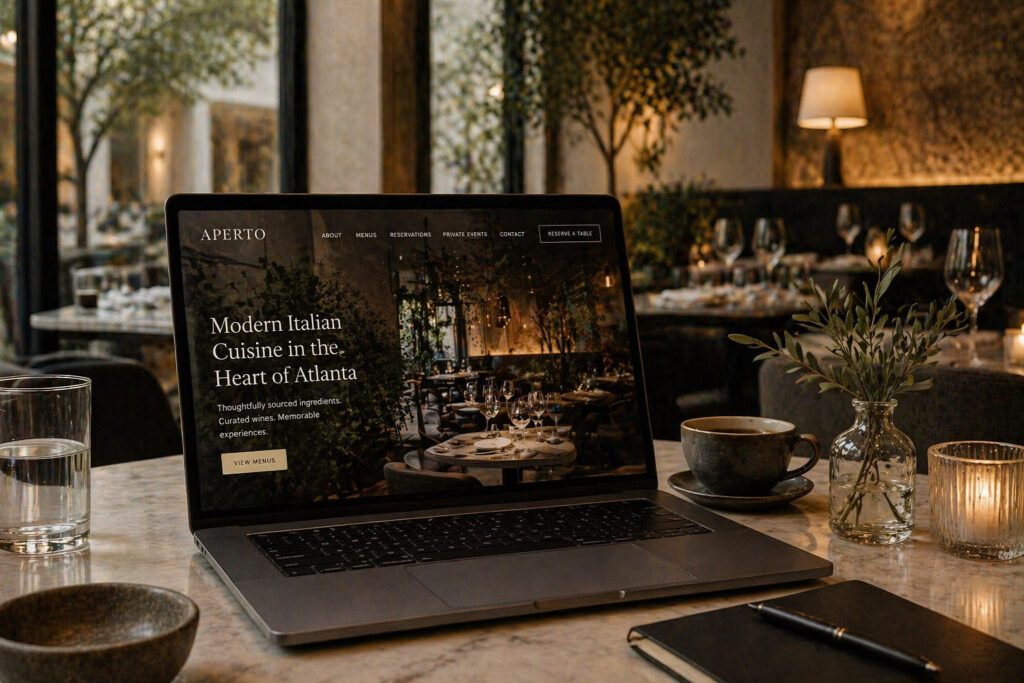
Platforms like Squarespace, Wix, and BentoBox really do make it easy to get something live quickly. In the beginning, that is often all you need. When speed matters and budgets are tight, a template can be a smart, practical choice.
At some point, however, the custom website vs template decision becomes about more than simply having a website. The better question becomes, is my website actually helping my business grow or is it holding me back? (Growing your business is the whole point, right?)
What is the difference between a custom website and a template?
A template website is built for general use, with a pre-defined structure and fixed layouts that require you to fit your content into the system. It can be a fast, affordable way to get online, especially when you are just getting started.
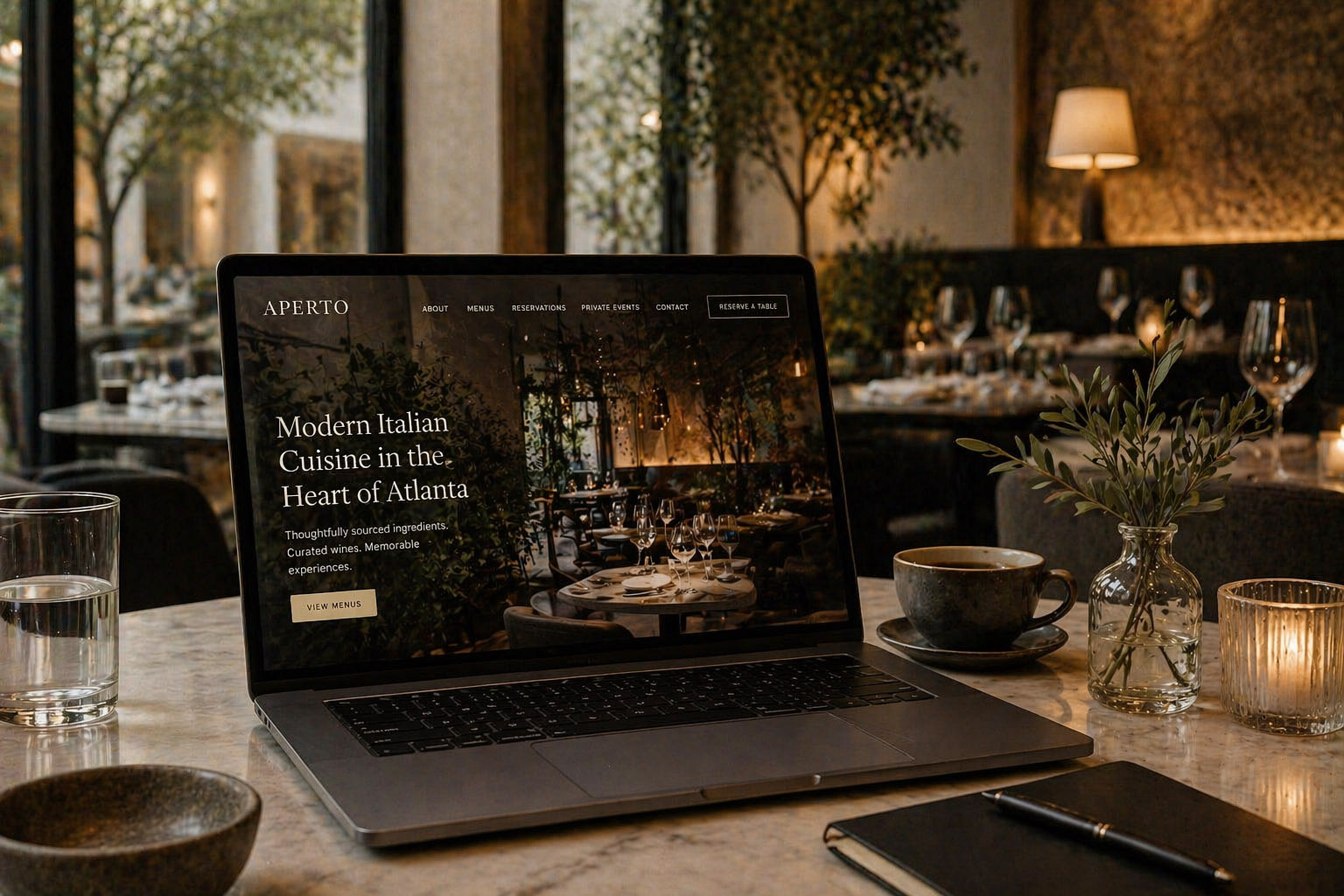
A custom website is built specifically for your business, with the structure, design, and functionality shaped around what you do, how people interact with your brand, and how you want to grow. It gives you more control over how your business is presented and can reflect the quality of your work more effectively. That difference may not matter at first, but over time it determines how much your website contributes to your business.
| Template Website | Custom Website |
|---|---|
| Pre-designed structure | Designed around the business |
| Faster, lower-cost launch | Greater flexibility and control |
| Content fits predetermined layouts | Layouts are built around the content |
| Good for getting started | Better suited to established/growing businesses |
| Platform limitations | Built to evolve with the business |
When does a template website make sense?
Templates are a starting point, not a long-term strategy. If you’re launching something new, validating an idea, or simply need to establish a presence online, they do exactly what they’re supposed to do. Templates are a fast and easy way to get an affordable website up and running. There’s nothing wrong with that stage. Most businesses go through it. The problem is staying there longer than you should.
When does a template start to hold you back?
Templates are designed to work for everyone, which means they are not deeply tailored to anyone. At first, that flexibility feels helpful. Over time, not so much.
Most businesses don’t upgrade their website until something breaks, but the real problem usually starts earlier, when the site no longer reflects where the business is or where it’s trying to go. You begin adjusting your content to fit the layout instead of presenting it clearly. Important information is hard to find. The site becomes harder to scale as your services, content, or positioning evolve, often feeling clunky and slow over time.
And then there’s the part that actually matters. Your website starts to fall out of sync with the quality of your work. You may be delivering strong results, operating at a higher level, or competing in a more serious market, but your website doesn’t reflect that. To a new visitor, there’s no clear separation between you and competitors operating at a lower level. That gap costs you opportunities.
Guess what else it costs you?
Templates are often marketed as a low-cost solution because the upfront investment is smaller. What many business owners don’t realize is that platforms like Wix, Squarespace, and GoDaddy charge ongoing monthly subscription fees to keep your website online. Over time, those fees can add up to hundreds or even thousands of dollars.
How do you know when it’s time to move beyond a template?
There’s usually a point where it becomes obvious (and NOT just because something breaks.)
Look for signals like:
- your website looks worse than the work you deliver
- people have to search to understand what you do
- the site feels slow, cluttered, or constrained
- you’re adjusting your business to fit the platform
- your website isn’t supporting your next stage of growth
If you’re seeing more than one of these, it’s probably not a website problem. It’s a sign your business has outgrown the way it’s being presented online.
What does a custom website actually change?
A custom website isn’t about adding more features. It’s about building a website around your business instead of building your business around your website. It allows your content to be structured intentionally, your services to be presented clearly, and your brand to show up at the level you’re actually operating at.
Instead of working around a system, you’re building something that supports how your business functions. After all, your website should communicate the value of your business before you have to explain it.
Think of it this way: if you were trying to meet new people, would you show up dirty and unkempt or put together, presentable and clean? (Unless of course you were looking to meet unkempt people…) Either way, people are going to judge you based on what they see before talking to you. The same is true of your website.
Custom website vs template: which should you choose?
The custom website vs template decision ultimately comes down to timing. Templates help you get started. Custom websites help you move forward. If your website is still doing its job, keep it. If it’s starting to feel like a limitation, that’s your answer.
At a certain point, your website stops being a placeholder and becomes your first impression. If that impression is off, everything that follows is harder.