Originally published in 2022. Updated in 2024 and then in 2026.
This article was originally published shortly after ChatGPT launched in November 2022. I’ve updated a few details that were no longer accurate, but the article still reflects what we were thinking about ChatGPT when most of us were trying to figure out what it was.
Everyone is talking about it, but if you’ve been living in a remote part of the world, you might be asking: What is ChatGPT? If you’re just nodding your head along and pretending you know what everyone is talking about, here’s your cheat sheet.
Created by OpenAI and released to the public as a research preview on November 30, 2022, ChatGPT quickly gained massive attention. Within a week, it had reached 1 million users. The name ChatGPT combines “chat,” because you interact with it through conversation, and “GPT,” which stands for Generative Pre-trained Transformer.
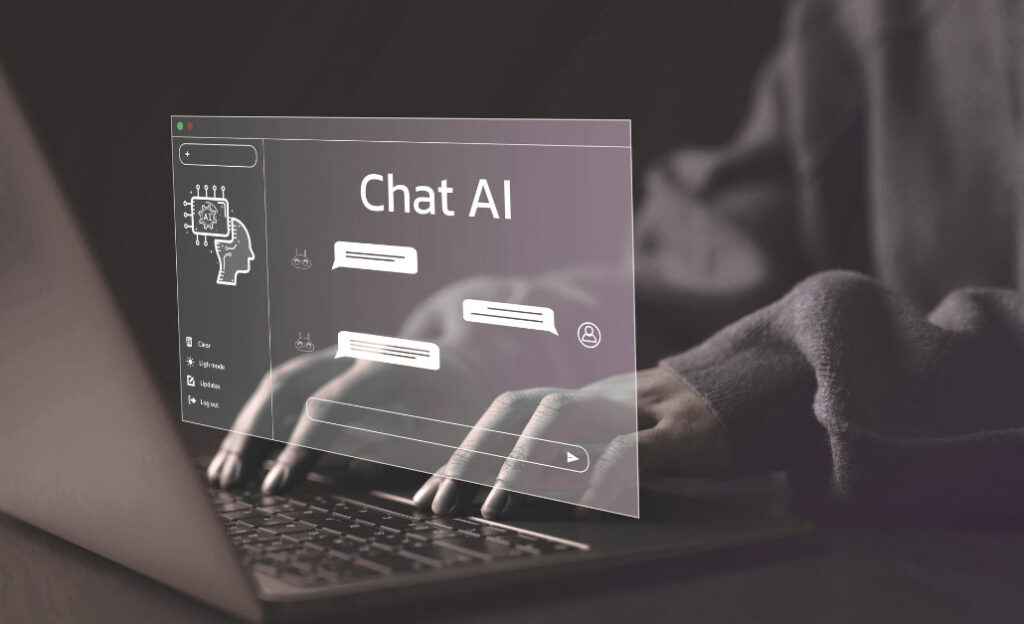
ChatGPT is a type of chatbot, which is a computer program designed to simulate conversation with people. The GPT part refers to the language model behind it, which was trained on massive amounts of information to recognize patterns and generate human-like responses. In simpler terms, ChatGPT is an artificial intelligence tool you can talk to in much the same way you would talk to another person. You ask a question or give it instructions, and it responds.
How Does It Work?
When this article was first published, ChatGPT could answer questions, summarize articles, generate lists, and create original content such as poetry and essays. It can still do all of those things, but it can now do quite a bit more.
Depending on the version you use, ChatGPT may be able to search the web, analyze files and data, understand and create images, have a voice conversation, write code, and help create documents, spreadsheets, and presentations. It has come a long way from the chatbot that fascinated and slightly terrified everyone at the end of 2022.
But how does it actually work? Basically, ChatGPT has been trained to recognize patterns in language and predict a useful response based on what you ask it. The models behind ChatGPT are trained and tested in several stages. Human feedback is part of that process, but ChatGPT does not instantly learn a new fact every time someone corrects it. (That would be cool but also very scary.) OpenAI may use conversations and feedback to improve its models over time, depending on the type of account you have and your data settings.
If you use a personal ChatGPT account, you can review those choices under Settings → Data Controls.
Is It As Great As Everyone Says?
My first encounter with ChatGPT was in a local social media group where parents and teachers were discussing what this new technology might mean for book reports and research papers at the local high school. One parent worried that students might never have to write a paper again.
Let’s not get carried away. ChatGPT is powerful, but it’s not perfect. It can misunderstand what you’re asking, overlook important details, repeat itself, or confidently give you an answer that is completely wrong. (I know all of this from personal experience with it.)
When this article was first published, AI-generated writing was often painfully easy to spot. It tended to lack personality, repeat the same idea in slightly different words, and organize everything into suspiciously tidy little sections. Although it has gotten a little better, there are still telltale signs such as:
- Using em dashes
- Overusing words such as “elevate” and “intentionally”
- Using too much industrial jargon instead of human terms
- Overusing phrases such as “from/to” and “whether/or”
In other words, you shouldn’t blindly trust it. A polished answer is not necessarily an accurate answer. ChatGPT can now search the web in many situations, but that does not guarantee that every response is current, complete, or correct. Also, I have personally found that quite often it uses the cached version of a website instead of searching for the most recent, accurate information. Think of it as an extremely capable assistant who works very quickly but, due to lack of real-world experience, doesn’t always get things right. You still need to check its work.
What Does This Mean for You?
If you’ve been in your industry for a while, you’ve already lived through more than one technology revolution. This is another one. That doesn’t mean it’s the end of anything. It means we adapt. There are professions where the impact has been felt sooner and more deeply. Writers, educators, developers, marketers, designers, and customer service professionals were among the first to pay close attention. As the owner of a digital marketing agency, I’d be lying if I said this technology didn’t have my full attention when it first appeared. It still does, although my understanding of it has become a lot more nuanced since I originally wrote this article.
Here’s how I thought about it at the time. When the modern electronic calculator was created, it didn’t make accountants irrelevant. It became a tool that helped them work faster and more accurately. That’s still how I see ChatGPT. It isn’t a substitute for experience, judgment, creativity, or common sense. It’s a tool, and a much more capable one than it was when this article was first published. Stay tuned…